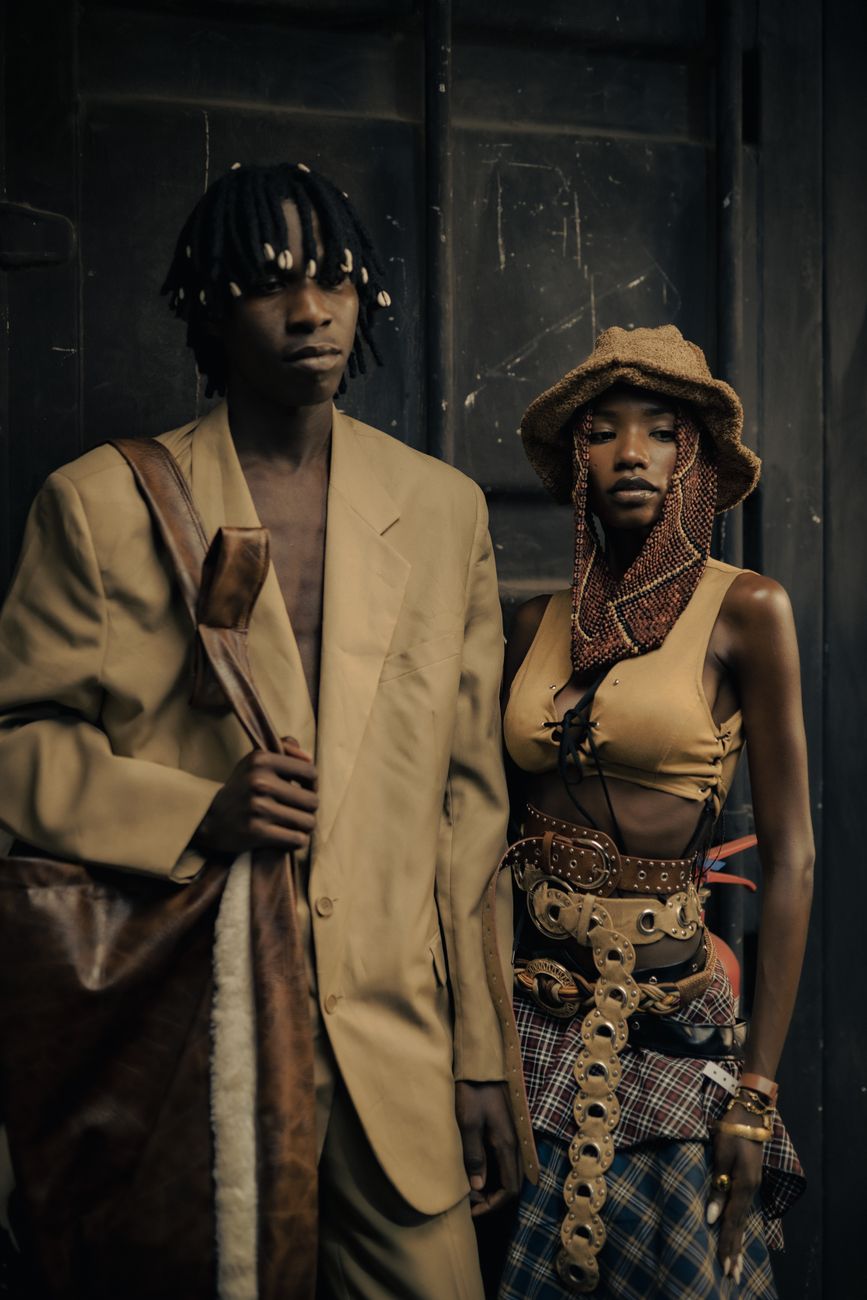
There was a time when currency was measured by what you could own. Money, property, resources, access and influence were some of the clearest indicators of value. Then the world shifted, and information became its own form of currency. Knowledge became power, data became an asset, and our ability to access and distribute information transformed the way we lived and worked. Now, I believe we are entering another shift, one that will place something much more human at the center of value: culture is the new currency.
Culture Is Already All Around Us
Culture is not something that exists somewhere far away from us. It is happening all around us, every single day. It is in the music we grew up listening to, the food our families prepared, the way our communities celebrate, the language we use, the clothes we wear, the dances we know without ever being formally taught, the art that moves us and the stories that have been passed down from one generation to the next. Culture is in the way a city sounds, the way a neighborhood gathers, the traditions a family keeps alive and even the little things we do that we rarely stop to question because they feel so natural to us.
Culture is memory made visible. It is our collective experience expressed through the way we live.
And the more I think about the world we are moving into, the more I believe we are going to realize just how valuable culture actually is.

The More Automated the World Becomes, the More Human We Become
We are entering an era where artificial intelligence, automation and technology are changing the way we create, work and communicate. AI can write, generate images, compose music, analyze information, automate workflows and help us produce things that once required entire teams of people. Technology will continue to make creation faster and access easier. It will remove friction from many areas of our lives and fundamentally change the way we work.
But there is an interesting question underneath all of this innovation: when everyone has access to increasingly similar technology, what becomes valuable?
What cannot be replicated.
Your perspective cannot be separated from your lived experience. Your cultural references, your memories, your upbringing, your sense of humor, your traditions and your worldview all influence what you create. Technology can assist with production, but it cannot replace the life that gave the creator something meaningful to say.
Technology is not simply changing what we do. It is changing how culture itself moves through the world. Research published in Scientific Reports describes technological advancement as a catalyst for cultural exchange, adaptation and hybridization, particularly across music, fashion and cuisine.
In a world where information and content become increasingly abundant, identity becomes increasingly important. When everyone has access to the same tools, the differentiator becomes what you bring to those tools. And what you bring is shaped by where you have been, who raised you, what you have experienced, what you have survived, what you have celebrated and what you believe is worth carrying forward.
That is culture.
Every Place Has a Culture
We often talk about culture as though it belongs exclusively to specific groups of people or countries, but culture is much bigger than that. Every continent has culture. Every country has culture. Every region has culture. Every state has culture, and within those states are cities, neighborhoods, communities and families with their own distinct ways of experiencing life.
Research increasingly challenges the idea that globalization will simply make the world culturally uniform. A 2024 study published in Nature Communications, analyzing more than 400,000 responses across 76 national cultures, found evidence of global divergence in values alongside increasing regional similarity. In other words, the world may be becoming more connected without becoming more culturally identical.
The United States alone is a fascinating example. The culture of the South feels different from New York. New York feels different from California. Atlanta has its own energy, language, history and rhythm, while Huntsville has its own identity and evolving culture. New Orleans carries a cultural identity that is unmistakably its own, just as Miami, Chicago, Los Angeles and countless smaller communities have developed their own cultural fingerprints.
And even within those places, there are layers upon layers of culture. A neighborhood can have a culture. A church can have a culture. A family can have a culture. A group of friends can develop its own language, rituals, traditions and inside jokes.
Culture does not require millions of people to validate its existence. It simply requires people to share experiences that become meaningful enough to carry forward.
Our Differences Are What Connect Us
This is what makes our differences so fascinating. The very things that make us different can also become the things that connect us. I’ve explored this tension before in my conversation around Essence Festival and the question of what happens when a deeply rooted cultural experience becomes a global platform.
I may not eat the same food you eat. I may not listen to the same music, celebrate the same holidays, dance the same dances or come from the same part of the world. I may not understand every reference from your childhood, and you may not understand every reference from mine. But there is still something deeply human about being invited into someone else’s world and discovering that, underneath our differences, there are emotions and experiences we recognize.
Food can become a doorway into another culture. Music can become a bridge. Dance can become a language. Art can become a mirror. And stories can become a meeting place.
We do not have to be exactly like one another to understand one another. Sometimes we simply have to be curious enough to listen.
I believe that curiosity will become increasingly important in the future because our world is becoming more connected while simultaneously becoming more personalized. Algorithms are constantly learning what we like, what we watch and what we buy. Artificial intelligence can generate content specifically for us. Technology can create experiences tailored to our individual preferences.
But there is something powerful about stepping outside of what is familiar and encountering another person’s world.
Culture gives us the opportunity to do that.
The Future Will Be Built on Stories
We are moving into an era where people will have access to more content than they could ever realistically consume. There will be more videos, images, music, information and AI-generated content than any one person could possibly experience in a lifetime.
So what will make us stop?
What will make us care?
What will make us remember?
A story.
Stories have always carried culture. Long before podcasts, blogs, books and social media, there were people sitting around fires telling stories. There were grandparents passing knowledge down to children. There were communities gathering to share experiences. There were songs, dances, paintings, recipes and oral traditions preserving pieces of history that might otherwise have disappeared.
Human beings have always needed somewhere to place their experiences, and stories became one of the most powerful containers for that experience.
I believe the future will be deeply rooted in storytelling, but not simply storytelling for entertainment. Storytelling will continue to be a vehicle for cultural preservation, connection, education, commerce, identity and legacy.
As technology makes it easier for anyone to create, the story behind the creation will matter even more.
People will want to know who made something, why they made it, where the inspiration came from and what the creation represents. They will want to understand the context behind the product, the artist, the brand, the community or the movement.
People do not simply want to buy things. Increasingly, they want to understand what those things mean.
That is where culture becomes currency.
Your Culture Is Part of Your Value
For a long time, many people were encouraged to separate their culture from their professional lives. We were taught to sound more polished, more neutral, more corporate and more universally understandable. We were often encouraged to blend in rather than stand out.
But I think the future is creating an interesting reversal.
The very things you may have once been encouraged to minimize can become the things that make your work recognizable.
Your accent can be part of your story. Your perspective can shape your brand. Your traditions can influence your creativity. Your aesthetic can become part of your identity. Your humor, your recipes, your music, your memories, your community and your personal experiences can all become part of the way you create and communicate with the world.
That does not mean turning culture into a marketing gimmick. Culture is much deeper than an aesthetic. It is not simply a trend, a costume or something to borrow when it becomes commercially convenient.
Culture is lived experience.
It is the accumulation of people, places, memories, traditions, struggles, celebrations and stories. It is something we inherit, something we experience and, in many cases, something we have the responsibility to preserve and evolve.
The Digital Future Will Still Need Human Connection
This is why I believe we are going to need each other more, not less, as technology advances.
Technology can connect us digitally, but digital connection is not automatically the same thing as belonging. We will still need community. We will still need shared experiences. We will still need people who can tell us where they came from so that we can better understand where we are going.
Perhaps that is one of the great ironies of the technological future.
The more digital we become, the more valuable authentic human expression may become. The more automated our lives become, the more precious genuine perspective becomes. And the more artificial intelligence can imitate the surface of culture, the more important it becomes to understand the soul underneath it.
Because culture is not simply what something looks like.
Culture is why something means something.
We Don’t Have to Become More Alike
The future will not require us to become less different. If anything, I believe it will require us to become more conscious of our differences and more intentional about what those differences can teach us.
We will have to learn how to share without erasing, celebrate without reducing, appreciate without appropriating and tell stories without forgetting the people who lived them. We will have to create new things while still honoring the old things that gave us the imagination to create them.
There is something beautiful about realizing that the world does not need everyone to become the same in order to become more connected.
Maybe connection was never supposed to come from sameness.
Maybe it comes from recognition.
From seeing something in another person’s story that reminds us of something inside ourselves.
From tasting food we have never eaten and discovering comfort in it. From hearing music in a language we do not speak and still feeling it move through us. From watching a dance born from a culture different from our own and recognizing the joy, grief, celebration or resistance within it.
Our differences give us more stories to share.
Technology May Build the Infrastructure, but Culture Gives It Meaning
Technology may be the infrastructure of the future, but culture will be part of its soul.
As the world becomes increasingly automated, perhaps the question will change. Instead of only asking, “What can you produce?” we may begin asking, “What do you carry?”
What stories live inside of you? What traditions shaped you? What perspective can only you bring? What part of your culture deserves to be remembered? What can your story teach someone who grew up completely differently from you?
Because somewhere inside those answers is a form of currency that cannot be measured by a bank account.
It is human currency.
It is the currency of connection, community, meaning, identity and belonging. It is the kind that travels across borders, languages, generations and time.
And perhaps that is the opportunity in front of us now. We have more technology than ever before to preserve our stories, share our creativity and introduce our cultures to people we may never physically meet. We can document what our grandparents knew. We can teach someone across the world how our food is made. We can share the music of our communities, the art of our people and the stories that shaped us.
We can take what was once local and allow it to travel globally without stripping it of the meaning that made it special in the first place.
Culture is the new currency.
And in this next chapter of humanity, I believe the people who understand the power of their own stories, while remaining curious enough to listen to the stories of others, will help shape the culture of the world that comes next.
The future is not simply going to be about what we build.
It is going to be about what we bring with us.
Written by Goddess Giselle
Learn more about my work and latest creations.





Leave a Reply